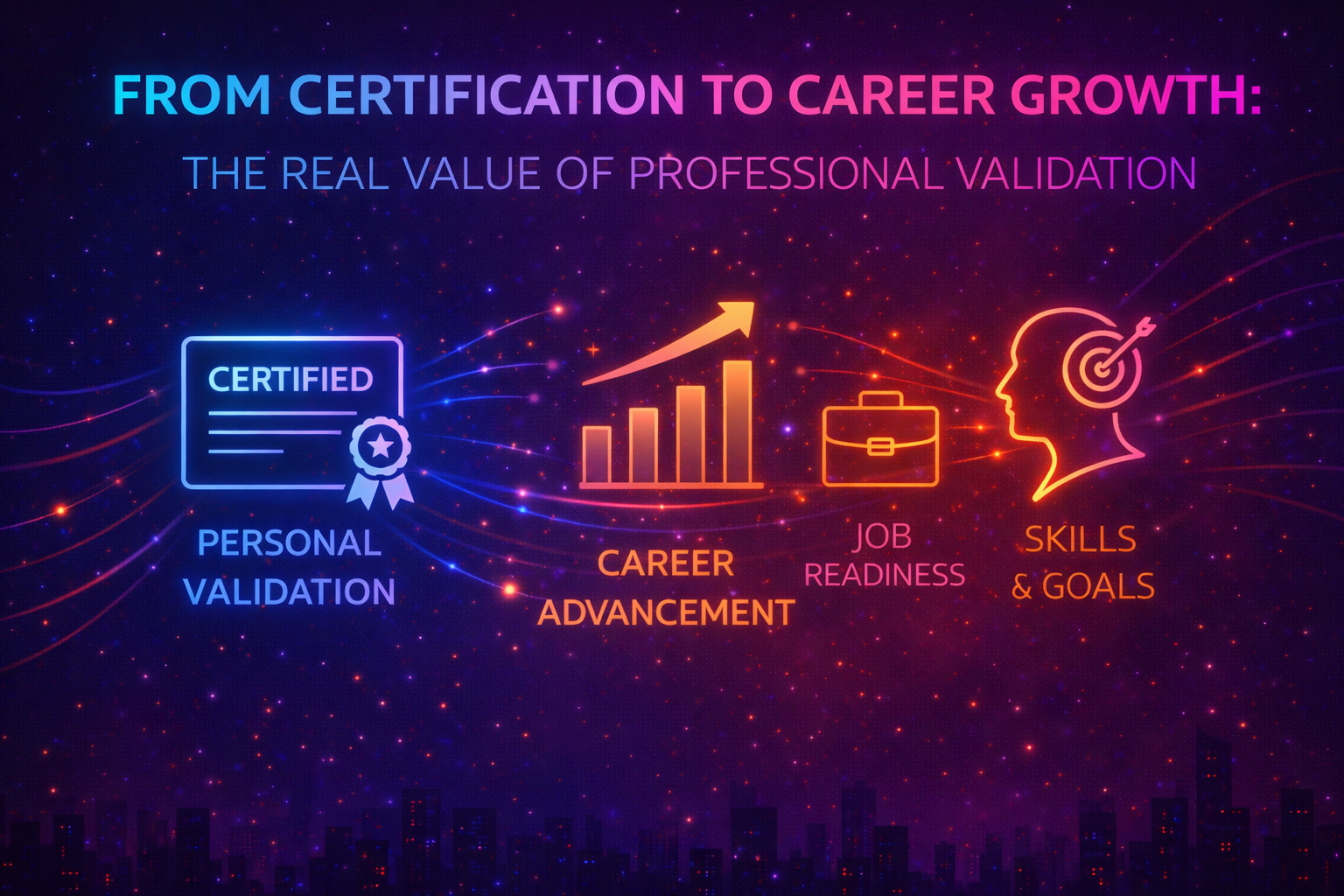
From Certification to Career Growth: The Real Value of Professional Validation

In today’s competitive global workforce, earning a certificate is often seen as a milestone. Yet the real question professionals and organizations should ask is deeper: Does this certification truly validate competence and contribute to long-term career growth?
As industries evolve rapidly and employers demand measurable capabilities, the concept of professional validation has become central to career advancement. Certification is no longer simply about completing a program. It is about demonstrating verified expertise that is recognized, trusted, and aligned with global standards.
The Changing Landscape of Professional Credentials
The global workforce has undergone a significant transformation. Traditional career paths once relied heavily on academic qualifications and years of experience. Today, employers seek professionals who can demonstrate practical skills, adaptability, and continuous learning.
This shift has increased the importance of professional certifications. However, not all certifications carry the same value. Some merely confirm participation in training programs, while others represent rigorous assessment processes designed to validate real-world competencies.
The difference between these two forms of credentials can significantly impact career opportunities.
What Professional Validation Really Means
Professional validation goes beyond simply acquiring knowledge. It confirms that a professional can apply that knowledge effectively in practical scenarios.
Validated certifications typically include structured evaluation mechanisms such as competency-based assessments, industry-aligned standards, and independent oversight. These elements ensure that certification reflects actual capability rather than theoretical understanding alone.
For employers, this level of validation provides confidence that certified professionals possess skills relevant to their roles. For professionals, it strengthens credibility and distinguishes them in a crowded talent marketplace.
Why Employers Value Validated Certifications
Organizations today operate in complex and rapidly changing environments. Hiring the right talent has become both critical and challenging. Employers must assess not only educational background but also practical capability and adaptability.
Validated certifications help address this challenge by offering a reliable benchmark of competence. They signal that a professional has met established standards and has undergone objective assessment.
From an employer’s perspective, validated certifications contribute to:
- Reduced hiring risk
- Greater workforce reliability
- Improved productivity and performance
- Alignment with industry standards
These benefits explain why many organizations now prioritize certified professionals when making recruitment and promotion decisions.
Certification as a Career Catalyst
For professionals, certification can serve as a powerful catalyst for career growth. It provides a structured pathway for developing expertise, gaining recognition, and accessing new opportunities.
Professionals who pursue validated certifications often experience several key advantages. They gain a clearer understanding of industry expectations, strengthen their professional credibility, and enhance their ability to compete in global job markets.
Certification can also open doors to specialized roles, leadership opportunities, and cross-border career mobility. As industries become increasingly interconnected, globally recognized credentials allow professionals to demonstrate competence across different regions and sectors.
The Role of Continuous Professional Development
Certification should not be viewed as a one-time achievement. In a rapidly evolving professional landscape, maintaining relevance requires ongoing learning and development.
Validated certification frameworks often incorporate mechanisms that encourage continuous professional capacity enhancement. These systems may include professional development credits, recertification requirements, and engagement in knowledge-sharing activities.
By promoting lifelong learning, such frameworks ensure that certified professionals remain up-to-date with industry developments and emerging best practices.
Bridging the Skills Gap
Across industries, organizations frequently report a gap between the skills they need and the skills available in the workforce. Certification programs that focus on validated competencies can play a crucial role in closing this gap.
By aligning training and assessment with real industry requirements, validated certifications help prepare professionals for the demands of modern workplaces. They provide clear benchmarks for skill development and ensure that learning outcomes translate into practical capability.
In this way, certification becomes a bridge between education and employment.
Strengthening Professional Identity
Professional validation also contributes to the development of a strong professional identity. When individuals earn credentials that are respected within their industries, they become part of a broader community of certified professionals who share common standards and ethical principles.
This sense of belonging encourages collaboration, knowledge exchange, and professional accountability. It reinforces the importance of maintaining high standards of practice and continuous improvement.
Such communities play an important role in advancing industries and supporting the professional growth of their members.
The Importance of Trusted Certification Bodies
For certification to deliver real value, it must be governed by credible and independent institutions. Certification bodies that follow internationally recognized guidelines and operate with transparency ensure that credentials maintain their integrity.
These organizations evaluate training providers, monitor assessment processes, and maintain consistent standards across certification programs. Their oversight ensures that professional validation remains objective, reliable, and aligned with global expectations.
Without such governance, certifications risk losing their credibility and value.
Looking Toward the Future
As the global economy continues to prioritize skills, adaptability, and innovation, professional validation will become even more significant.
Organizations will increasingly rely on certified professionals to drive transformation, maintain quality standards, and navigate complex challenges. At the same time, professionals will seek credentials that help them remain competitive and future-ready.
Certification, when grounded in rigorous validation and continuous development, serves as a powerful mechanism for aligning individual growth with organizational success.
Conclusion
Certification is more than a document. It is a reflection of competence, dedication, and professional integrity.
When backed by credible validation and global standards, certification becomes a meaningful asset that supports career advancement, strengthens workforce capability, and builds trust across industries.
In an era where skills define opportunity, professional validation stands as a cornerstone of sustainable career growth.